


QMutableLinkedListIterator Class▲
-
Header: QMutableLinkedListIterator
-
CMake:
find_package(Qt6 REQUIRED COMPONENTS Core5Compat)
target_link_libraries(mytarget PRIVATE Qt6::Core5Compat)
-
qmake: QT += core5compat
Detailed Description▲
https:// has both Java-style iterators and STL-style iterators. The Java-style iterators are more high-level and easier to use than the STL-style iterators; on the other hand, they are slightly less efficient.
https://<T> allows you to iterate over a https://<T> and modify the list. If you don't want to modify the list (or have a const https://), use the slightly faster https://<T> instead.
The https:// constructor takes a https:// as argument. After construction, the iterator is located at the very beginning of the list (before the first item). Here's how to iterate over all the elements sequentially:
QLinkedList<float> list;
...
QMutableLinkedListIterator<float> i(list);
while (i.hasNext())
    qDebug() << i.next();
The https://() function returns the next item in the list and advances the iterator. Unlike STL-style iterators, Java-style iterators point between items rather than directly at items. The first call to https://() advances the iterator to the position between the first and second item, and returns the first item; the second call to https://() advances the iterator to the position between the second and third item, returning the second item; and so on.
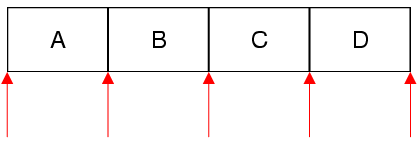
Here's how to iterate over the elements in reverse order:
QMutableLinkedListIterator<float> i(list);
i.toBack();
while (i.hasPrevious())
    qDebug() << i.previous();
If you want to find all occurrences of a particular value, use https://() or https://() in a loop.
If you want to remove items as you iterate over the list, use https://(). If you want to modify the value of an item, use https://(). If you want to insert a new item in the list, use https://().
Example:
QMutableLinkedListIterator<int> i(list);
while (i.hasNext()) {
    int val = i.next();
    if (val < 0) {
        i.setValue(-val);
    } else if (val == 0) {
        i.remove();
    }
}
The example traverses a list, replacing negative numbers with their absolute values, and eliminating zeroes.
Only one mutable iterator can be active on a given list at any time. Furthermore, no changes should be done directly to the list while the iterator is active (as opposed to through the iterator), since this could invalidate the iterator and lead to undefined behavior.
See Also▲
See also https://, https://
Member Function Documentation▲
QMutableLinkedListIterator::QMutableLinkedListIterator(QLinkedList<T> &list)▲
Constructs an iterator for traversing list. The iterator is set to be at the front of the list (before the first item).
See Also▲
See also https://()
QMutableLinkedListIterator<T> &QMutableLinkedListIterator::operator=(QLinkedList<T> &container)▲
Makes the iterator operate on list. The iterator is set to be at the front of the list (before the first item).
See Also▲
See also https://(), https://()
void QMutableLinkedListIterator::toFront()▲
Moves the iterator to the front of the container (before the first item).
See Also▲
See also https://(), https://()
void QMutableLinkedListIterator::toBack()▲
Moves the iterator to the back of the container (after the last item).
See Also▲
See also https://(), https://()
bool QMutableLinkedListIterator::hasNext() const▲
Returns true if there is at least one item ahead of the iterator, i.e. the iterator is not at the back of the container; otherwise returns false.
See Also▲
See also https://(), https://()
bool QMutableLinkedListIterator::hasPrevious() const▲
Returns true if there is at least one item behind the iterator, i.e. the iterator is not at the front of the container; otherwise returns false.
See Also▲
See also https://(), https://()
bool QMutableLinkedListIterator::findNext(const T &value)▲
Searches for value starting from the current iterator position forward. Returns true if value is found; otherwise returns false.
After the call, if value was found, the iterator is positioned just after the matching item; otherwise, the iterator is positioned at the back of the container.
See Also▲
See also https://()
bool QMutableLinkedListIterator::findPrevious(const T &value)▲
Searches for value starting from the current iterator position backward. Returns true if value is found; otherwise returns false.
After the call, if value was found, the iterator is positioned just before the matching item; otherwise, the iterator is positioned at the front of the container.
See Also▲
See also https://()
void QMutableLinkedListIterator::insert(const T &value)▲
Inserts value at the current iterator position. After the call, the iterator is located just after the inserted item.
See Also▲
See also https://(), https://()
T &QMutableLinkedListIterator::next()▲
Returns a reference to the next item, and advances the iterator by one position.
Calling this function on an iterator located at the back of the container leads to undefined results.
See Also▲
See also https://(), https://(), https://()
T &QMutableLinkedListIterator::peekNext() const▲
Returns a reference to the next item, without moving the iterator.
Calling this function on an iterator located at the back of the container leads to undefined results.
See Also▲
See also https://(), https://(), https://()
T &QMutableLinkedListIterator::peekPrevious() const▲
Returns a reference to the previous item, without moving the iterator.
Calling this function on an iterator located at the front of the container leads to undefined results.
See Also▲
See also https://(), https://(), https://()
T &QMutableLinkedListIterator::previous()▲
Returns a reference to the previous item and moves the iterator back by one position.
Calling this function on an iterator located at the front of the container leads to undefined results.
See Also▲
See also https://(), https://(), https://()
void QMutableLinkedListIterator::remove()▲
Removes the last item that was jumped over using one of the traversal functions (https://(), https://(), https://(), https://()).
Example:
QMutableLinkedListIterator<int> i(list);
while (i.hasNext()) {
    int val = i.next();
    if (val < -32768 || val > 32767)
        i.remove();
}
See Also▲
See also https://(), https://()
void QMutableLinkedListIterator::setValue(const T &value) const▲
Replaces the value of the last item that was jumped over using one of the traversal functions with value.
The traversal functions are https://(), https://(), https://(), and https://().
Example:
QMutableLinkedListIterator<double> i(list);
while (i.hasNext()) {
    double val = i.next();
    i.setValue(std::sqrt(val));
}
See Also▲
See also https://(), https://(), https://()
const T &QMutableLinkedListIterator::value() const▲
Returns the value of the last item that was jumped over using one of the traversal functions (https://(), https://(), https://(), https://()).
After a call to https://() or https://(), value() is equivalent to https://(). After a call to https://() or https://(), value() is equivalent to https://().
See Also▲
See also https://()
T &QMutableLinkedListIterator::value()▲
This is an overloaded function.
Returns a non-const reference to the value of the last item that was jumped over using one of the traversal functions.